
Back and neck pain can affect nearly every part of daily life. Sitting, working, standing, exercising, and even sleeping can become uncomfortable when symptoms persist. For many people, treatment does not require surgery.
At Bridger Orthopedic in Bozeman and Belgrade, Montana, the non-operative spine team offers several treatment options to help patients manage back and neck pain. The first step is understanding what's causing the symptoms and identifying an approach that fits the patient's condition, activity level, and goals.
Back and neck pain can have several causes. Symptoms may come from irritated nerves, spinal joints, muscle problems, or other conditions affecting the spine.
A thorough evaluation helps the care team identify the source of the pain and determine which treatments may be appropriate. This may include a physical examination, a review of medical history, and diagnostic testing when needed.
Bridger Orthopedic non-operative spine team includes specialists in physical medicine and rehabilitation and interventional pain management. Together, they offer different approaches to diagnosing and treating spine-related conditions without starting with surgery.
Two physicians bring specialized experience to the non-operative spine care team. Their different areas of expertise allow patients to access a range of diagnostic and treatment options.
Dr. Elba Gerena Maldonado is a triple board-certified physiatrist who specializes in identifying the source of spine and nerve pain.
Physiatrists focus on physical medicine and rehabilitation. Their approach emphasizes improving function, managing pain, and helping patients maintain or regain mobility without surgery when appropriate.
Dr. Gerena Maldonado uses diagnostic tools such as electromyography (EMG) and nerve conduction studies to evaluate nerve function. These tests can help identify conditions involving nerve irritation or damage, including pinched nerves and carpal tunnel syndrome.
Her treatment approach emphasizes conservative, non-opioid options. Depending on the patient's condition, treatments may include:
Identifying the source of symptoms helps guide treatment recommendations and gives patients a clearer understanding of their options.
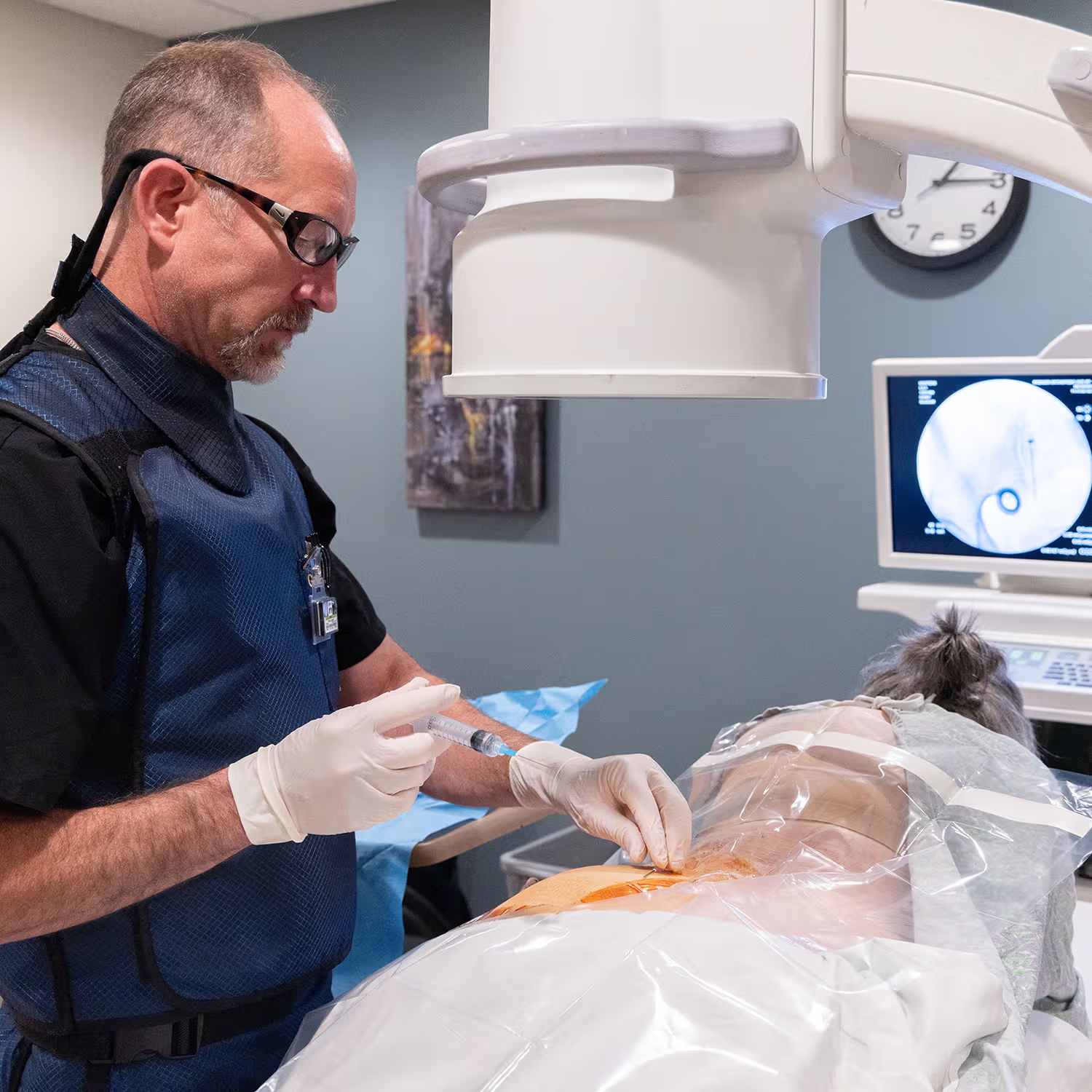
Dr. Gene Slocum is board-certified and fellowship-trained in interventional pain management. His approach uses targeted procedures to address pain originating in the spine.
Depending on the diagnosis, treatment may involve several types of injections or minimally invasive procedures.
These injections deliver medication into the epidural space around the spinal nerves. They can help reduce inflammation and irritation associated with certain spine conditions.
Facet joints connect the bones of the spine and help provide stability and movement. When these joints contribute to back or neck pain, targeted injections or medial branch blocks can help evaluate and manage symptoms.
These procedures use controlled heat or cold to disrupt pain signals from targeted nerves. They may provide longer-lasting relief for certain types of chronic pain.
For some patients with complex chronic pain, spinal cord stimulation may be an option. This treatment uses an implanted device to deliver electrical signals that modify how the nervous system processes pain.
The right procedure depends on the underlying condition, previous treatments, and individual patient needs.
Dr. Slocum also works closely with other healthcare professionals, including physical therapists, occupational therapists, chiropractors, acupuncturists, and massage therapists. This collaborative
approach helps patients consider different treatment options as part of a broader pain management plan.
Physical therapy is often an important part of non-surgical back and neck pain treatment.
Pain can lead people to limit movement or avoid certain activities. Over time, reduced activity may contribute to weakness, stiffness, and decreased mobility.
A physical therapy program can help patients gradually rebuild strength, improve flexibility, and restore movement. Treatment may include targeted exercises, mobility work, and education about movement mechanics.
Building strength and improving mobility can also help reduce stress on certain structures in the spine. For some patients, this may help decrease recurring symptoms and support a return to regular activities.
Occupational therapy may also help patients adapt everyday movements and activities to reduce discomfort and improve function.
The goal is to develop a rehabilitation plan that supports the patient's needs and works alongside other recommended treatments.
Many people with back and neck pain can explore non-surgical treatment options before considering an operation. However, conservative treatment is not appropriate for every condition.
If symptoms persist, worsen, or interfere with daily activities despite other treatments, a surgical evaluation may be recommended. Certain conditions may also require earlier surgical attention based on the diagnosis and severity of symptoms.
At Bridger Orthopedic, non-operative spine specialists and a specialized spine surgical team, led by Dr. Addison Wood, DO, work within the same practice. When surgery becomes an appropriate option, patients can transition to a surgical consultation with providers who have access to their existing medical information and treatment history.
This communication helps keep the care process connected and allows patients to understand their options at each stage.
Living with back or neck pain can make it difficult to stay active, work comfortably, and enjoy everyday activities. Finding the source of the pain is an important first step toward identifying an appropriate treatment plan.
Bridger Orthopedic offers non-surgical spine care in Bozeman and Belgrade, Montana, with specialized providers in physical medicine, rehabilitation, and interventional pain management.
From diagnostic nerve testing and targeted injections to physical therapy and advanced pain management procedures, patients have access to several treatment options within one practice.
Surgery is not always the first step. A thorough evaluation can help determine which approach makes sense for your condition and goals.
Contact Bridger Orthopedic to learn more about non-surgical back and neck pain treatment and available appointment options.