
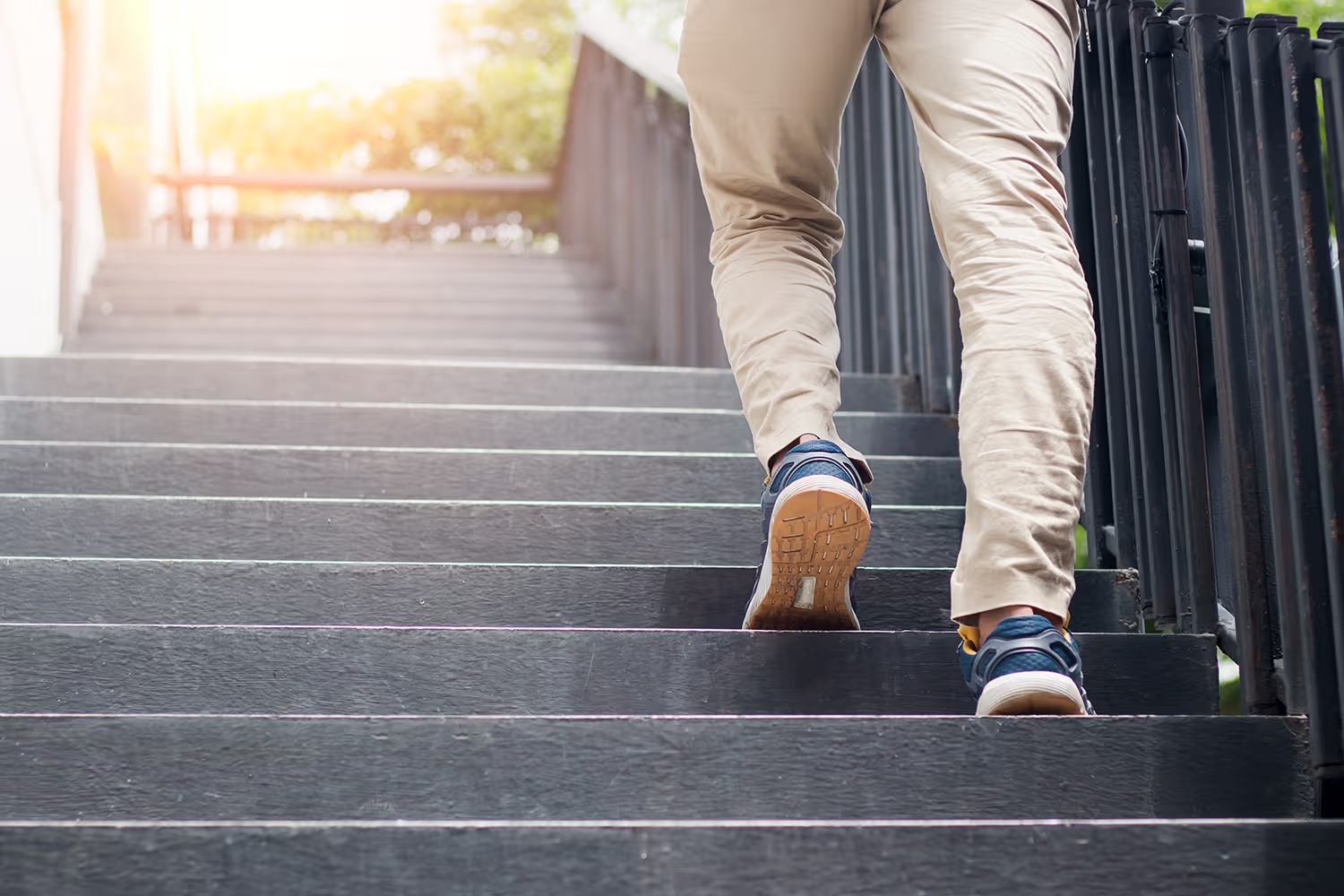
Your knees work hard every day.
Every time you walk, your knees absorb forces that can be several times your body weight. Climb a flight of stairs? The demands increase. Go for a run, hike a mountain trail, or spend the day skiing? Your knees are working even harder.
That's why taking care of your knees isn't just about preventing injuries. It's about keeping you active and doing the things you love—from hiking and skiing to biking, pickleball, and everyday life around Southwest Montana.
When knee pain does develop, understanding what's causing it is the first step toward finding the right treatment.
Knee pain can happen for many different reasons. Sometimes it's the result of an injury, such as a torn ligament or meniscus. Other times, pain develops gradually from overuse, arthritis, or changes in the joint over time.
Some common causes of knee pain include:
Not every knee injury requires surgery. In fact, many knee problems can improve with the right combination of activity changes, physical therapy, strengthening, and other non-surgical treatments.
It's normal to feel a little sore after a long hike or an especially active weekend. But pain that sticks around shouldn't be something you simply learn to live with.
It may be time to have your knee evaluated if:
Getting the right diagnosis early can help you understand your options and prevent a smaller problem from becoming a bigger one.
One of the best things you can do for your knees is build strength around them.
Your hips, glutes, and legs all play an important role in supporting your knees and helping your body handle the demands of everyday movement and exercise.
Physical therapy can help you build strength, improve balance and mobility, and address movement patterns that may be contributing to your pain.
For active people, the goal isn't simply to get rid of pain. It's to help you move confidently and get back to the activities you enjoy.
There isn't one treatment that works for every knee problem. Your treatment plan depends on what's causing your pain, how severe it is, your activity level, and your goals.
Depending on your situation, treatment may include:
Physical therapy can help improve strength, flexibility, balance, and movement. A personalized program can also help you safely return to activities such as hiking, skiing, running, or sports.
Sometimes your knee needs a break from the activities that are aggravating it. That doesn't necessarily mean stopping everything.
Your provider or physical therapist can help you find ways to stay active while giving your knee time to recover.
Depending on the cause of your knee pain, medications, orthobiologics, MLS Laser treatments, injections, or a combination of these may be part of your treatment plan. Your orthopedic specialist can help you understand whether these options make sense for you.
When an injury is significant, or pain continues despite non-surgical treatment, surgery may be an option.
For some injuries, procedures can repair or address damaged structures within the knee. For patients with more advanced arthritis, knee replacement may provide another path toward improved mobility and less pain.
Hearing the words "knee replacement" can feel overwhelming. But for someone whose knee pain is significantly affecting their quality of life, it can be an opportunity to get back to living more comfortably.
Knee replacement may be considered when arthritis or other damage has caused:
The decision to have a knee replacement isn't based on an X-ray alone. Your symptoms, lifestyle, overall health, imaging, and personal goals all play a role.
Knee replacement is only one part of the journey. Recovery and rehabilitation are important pieces of getting back on your feet.
Physical therapy helps restore strength, mobility, balance, and confidence as you gradually increase your activity.
Everyone's recovery is different. Your timeline may depend on your overall health, strength before surgery, the type of procedure, and how your body responds during recovery.
The goal is to help you move forward safely—not simply to get you through surgery.
Living in Bozeman means there's always something to get outside and do.
Maybe your goal is to hike the next trail, get back on your bike, ski this winter, play pickleball with friends, or simply walk around town without thinking about your knees.
Whatever your goal, Bridger Orthopedic is here to help.
Our fellowship-trained orthopedic specialists work as a team to provide comprehensive orthopedic care in Southwest Montana. From sports injuries and physical therapy to joint replacement and pain management, we offer a range of treatment options designed around you.
And when an injury happens unexpectedly, our orthopedic urgent care in Bozeman and Belgrade provides convenient access to orthopedic specialists—the only orthopedic urgent care in the Gallatin Valley.
You don't have to wait for knee pain to take you out of the activities you love.
Your knees work hard every day. Give them the support they deserve.